Boiler Tube Cleaning: Removing Scale, Soot and Blockages
How to clean boiler tubes with rotary tube cleaners: soot and ash in fire-tube boilers, scale in water-tube boilers, choosing brushes and heads, GT2000/GT3000.

Deposits on boiler tubes act as insulation. Soot and ash on the gas side, or scale on the water side, reduce heat transfer, so more fuel is burned for the same steam output and tube metal temperatures can rise. Blocked tubes also change the gas or water flow through the boiler. Regular mechanical cleaning keeps the tubes open and gives the inspector a clean surface to examine.
This article covers where deposits form, how rotary tube cleaners remove them, and how to choose a machine and cleaning heads for a boiler.
Where deposits form
Fire-tube boilers
In a fire-tube boiler the combustion gas passes through the tubes, so soot, ash and unburned fuel residue collect on the inside of the tubes. Oil- and solid-fuel-fired boilers usually foul faster than gas-fired ones. Because the tube inside is the gas side, these deposits can be reached from the tube ends once the smoke box doors or the rear chamber are opened.
Water-tube boilers
In a water-tube boiler the water and steam are inside the tubes. Hardness salts and corrosion products form scale on the tube inside, especially where water treatment has been poor. Scale is usually harder than soot and needs cutting or abrasive heads rather than soft brushes. Gas-side deposits in water-tube boilers form on the outside of the tubes and are normally handled by sootblowers or other methods; this article focuses on cleaning the tube bore.
How rotary tube cleaners work
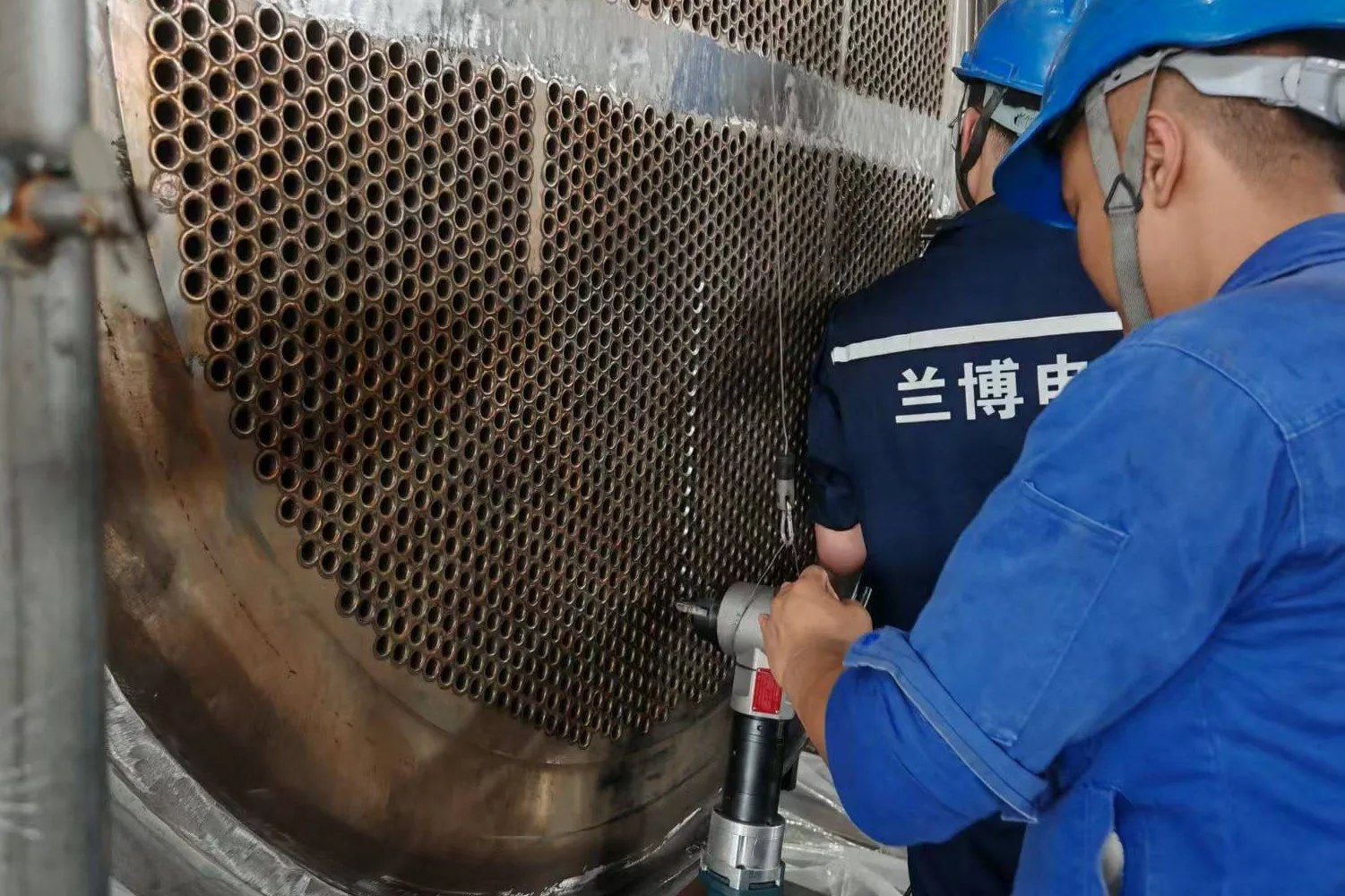
A rotary tube cleaner drives a flexible shaft carrying a brush, scraper or cutter head. The operator feeds the rotating head through the tube, and the head loosens the deposit from the wall. Depending on the machine, the loosened material is flushed out with water or removed by air and vacuum.
Rotary cleaning has some practical advantages for boiler work:
- It removes deposits mechanically, without filling the boiler with chemicals.
- Each tube is cleaned and can be checked individually, so blocked tubes are found and opened.
- The equipment is portable and can be brought to the boiler house through normal doors.
Wet and dry cleaning
Wet cleaning with water flushing carries loosened scale out of the tube and keeps dust down. It is common for water-side scale. Dry cleaning, with air or vacuum collection, avoids wetting soot and ash, which would otherwise turn into a paste; it is often preferred for the gas side of fire-tube boilers. Confirm with the boiler owner which method is allowed before work starts.
Choosing the cleaning head
The head must match the tube ID and the deposit:
- Soft or nylon brushes for light soot and loose deposits.
- Steel wire brushes for heavier soot and ash.
- Scrapers and cutter heads for hard scale and for opening blocked tubes.
Measure the tube ID rather than assuming it from the OD, because wall thickness varies. A head that is too small leaves deposit on the wall; a head that is too tight wears quickly and loads the shaft. For tubes that are heavily blocked, start with a smaller cutter to open a path, then follow with a full-size head.
Lanbo boiler tube cleaners
Lanbo offers two groups of boiler tube cleaners.
GT2000 and GT3000
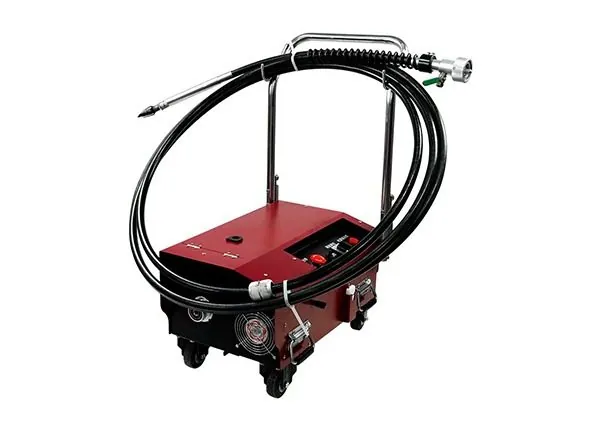
The GT2000 Boiler Tube Cleaner and GT3000 Boiler Tube Cleaner are Lanbo's own boiler tube cleaning machines for maintenance teams that clean boilers regularly. Send us the tube ID, tube length and type of deposit, and we will recommend which model and which heads suit the job.
G series
The G series covers different site conditions:
- G-206 Boiler Tube Cleaner
- G-212 Portable Boiler Tube Cleaner — portable model for moving between sites
- G-302 Split Type Boiler Tube Cleaner — split construction for access through tight openings
- G-307 Boiler Tube Cleaner
A typical cleaning procedure
- Isolate and cool the boiler according to the site's lock-out and permit rules. Open the smoke box doors or the access covers.
- Survey the tubes. Count blocked tubes and note the type and thickness of deposit. Measure the tube ID.
- Select heads and fit the correct shaft length for the tube length.
- Clean each tube, feeding the head steadily without forcing it. Let the head do the work; pushing hard bends the shaft.
- Collect the debris with water flushing or vacuum, and keep it out of the burner and the rear chamber.
- Inspect. Check that each tube is open and the wall is clean. Note tubes with thin walls or pitting for the inspection report — these may be candidates for replacement.
When inspection shows that many tubes are thinned or leaking at the ends, cleaning is no longer enough. Lanbo carries out boiler retubing on fire-tube and water-tube boilers, using its own method that can reduce the cost of a retube; contact us to discuss.
Lanbo tools for this job
- GT2000 Boiler Tube Cleaner
- GT3000 Boiler Tube Cleaner
- G-212 Portable Boiler Tube Cleaner and G-302 Split Type Boiler Tube Cleaner
- J Series Combination Flaring and Beading Expanders — for tube replacement in fire-tube boilers
Tell us the boiler type, tube ID and length, the number of tubes and the kind of deposit, and we will recommend a machine and a head set. Request a quote.
FAQ
How do I choose between the GT2000 and the GT3000?
The choice depends on the tube ID, tube length and deposit type. Send us these details and we will recommend the model and heads.
Should fire-tube boiler tubes be cleaned wet or dry?
Gas-side soot and ash in fire-tube boilers are often cleaned dry, with air or vacuum collection, because water turns soot into paste. Water-side scale is usually cleaned wet. Follow the boiler owner's requirements.
Which head removes hard scale?
Hard scale needs a scraper or cutter head rather than a brush. For a fully blocked tube, open a path with a smaller cutter, then clean with a head sized to the tube ID.
When should a boiler be retubed instead of cleaned?
When inspection after cleaning shows tubes with thinned walls, pitting or repeated leaks at the tube ends, replacement is worth considering. Lanbo carries out retubing on fire-tube and water-tube boilers; contact us to discuss.