Fire-Tube Boiler Retubing: Expanding, Flaring and Beading Tubes
How a fire-tube boiler retube is planned and how J series combination expanders roll, flare and bead each tube end in one operation. Tools, steps and FAQ.

A fire-tube boiler carries hot combustion gas through tubes that are surrounded by water. Over the years the tubes thin from corrosion, collect deposits and can start to leak at the tube-to-tubesheet joint. When repairs on individual tubes are no longer practical, the owner plans a retube: the old tubes come out, the tubesheet holes are prepared, and new tubes are installed and sealed.
This article explains how the tube ends of a fire-tube boiler are expanded, flared and beaded, how Lanbo's J series combination expanders handle those operations in one pass, and what to consider when planning a retube.
Why fire-tube boiler tube ends are expanded, flared and beaded
Each tube in a fire-tube boiler is held at both ends by a tubesheet. The joint has to be tight against boiler water pressure and strong enough to resist the axial loads caused by heating and cooling. Three operations are used at the tube end:
- Expanding (rolling): the tube is rolled outward inside the tubesheet hole until the tube wall is pressed firmly against the hole. This creates the seal and the holding strength.
- Flaring: the tube end that projects beyond the tubesheet is opened into a cone. The flare adds resistance to the tube being pushed back through the hole.
- Beading: on the fire side, the flared end is rolled back against the tubesheet face. A bead reduces the amount of exposed tube end in the hot gas stream, which helps prevent the end from overheating and cracking.
The applicable boiler code and the boiler drawing define where beading is required, how far the tube should project and what the finished bead should look like. Follow those documents for every job.
One operation with a J series combination expander
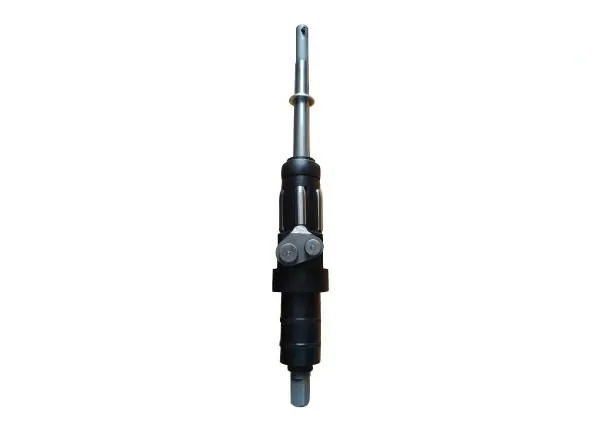
With conventional tools, rolling, flaring and beading are separate steps, often with different tools and repeated setups at each tube. The J Series Combination Flaring and Beading Expanders combine these steps: the expander rolls the tube into the hole and forms the flare and bead in one pass.
The J series is designed for fire-tube boiler building and retubing, covering tube OD 38.1–76.2 mm (1-1/2" to 3"). Fewer tool changes per tube means less handling time at the tubesheet.
Driving the expander
The expander needs a drive with enough torque and controlled speed for the tube size and wall. For fire-tube boiler tubes, common choices are:
- ES Series Electric Tube Roller: torque range 2–200 N·m depending on motor, speed 90–1450 rpm, suitable for copper, steel, titanium and aluminium tubes.
- XR Series High-Torque Servo Tube Roller: 5–300 N·m, tube OD φ12.7–φ101.6 mm, with a telescopic shaft and a 1000 × 1000 mm working window.
Torque-controlled drives stop at a set torque, which helps keep the expansion consistent across hundreds of tubes. A TQM Series torque tester (0.4–500 N·m across 4 models) can be used to check the roller's output before work starts.
How a fire-tube boiler retube is planned
A retube is a planned outage. The following steps are typical; the exact sequence depends on the boiler design and the inspection authority.
1. Inspection and survey
Record the number of tubes, tube OD, wall thickness, material and length, and the condition of both tubesheets. Look for cracked ligaments, enlarged or out-of-round holes, and corrosion at the tubesheet face.
2. Tube removal
Old tubes are cut free at the tube ends and pulled out. The aim is to remove the tubes without scoring or enlarging the tubesheet holes, because damaged holes make the new joints harder to seal.
3. Hole preparation
Each hole is cleaned back to bright metal and checked for size and roundness. Scale, rust and old tube material left in the hole reduce the contact between the new tube and the tubesheet.
4. New tube installation
New tubes are cut to the required length, with the projection specified on the drawing, and inserted.
5. Expanding, flaring and beading
Each tube is rolled, flared and beaded, typically with the J series expander driven by a torque-controlled roller. Work in a pattern agreed for the job rather than tube by tube along one row, so that tubesheet distortion stays under control.
6. Testing and records
The boiler is hydrostatically tested as required by the applicable code, and any weeping joints are re-rolled. Keep a record of tube sizes, torque settings and test results for the boiler file.
Lanbo retubing service for fire-tube and water-tube boilers
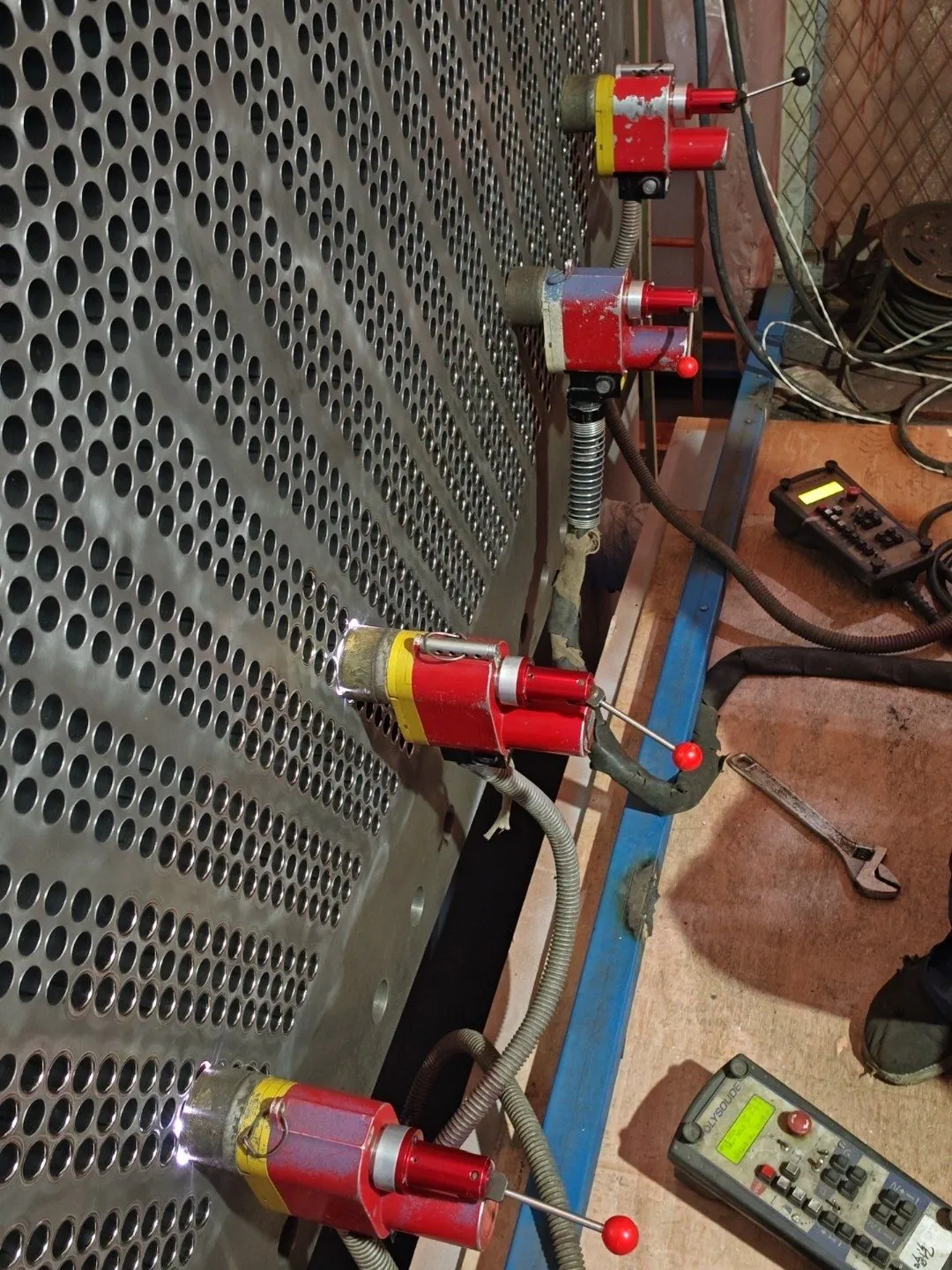
Besides supplying tools, Lanbo carries out boiler retubing work, especially on fire-tube boilers and also on water-tube boilers. Lanbo uses its own working method, which can reduce the cost of a retube. The method depends on the boiler, so we discuss it case by case — contact us with the boiler details to discuss your project.
Lanbo tools for this job
- J Series Combination Flaring and Beading Expanders — roll, flare and bead in one pass, tube OD 38.1–76.2 mm
- ES Series Electric Tube Roller — 2–200 N·m drive for the expander
- XR Series High-Torque Servo Tube Roller — 5–300 N·m servo drive
- TQM Series Torque Tester — checks roller torque before work
- GT2000 Boiler Tube Cleaner — cleaning tubes during maintenance between retubes
Send us the boiler type, tube OD and wall thickness, tube material and number of tubes, and we will suggest a tool set or a service plan. Request a quote.
FAQ
What tube sizes does the J series expander cover?
The J series covers tube OD 38.1–76.2 mm (1-1/2" to 3"), which matches the tube sizes used in many fire-tube boilers. Tell us the exact OD and wall thickness so we can match the expander.
Does the J series replace a separate flaring tool?
Yes. The J series expander rolls the tube and forms the flare and the bead in one operation, so a separate flaring tool and a separate beading step are not needed for tubes within its range.
Which end of a fire-tube boiler tube is beaded?
Beading is applied where the tube end is exposed to hot combustion gas, typically the fire side. The boiler drawing and the applicable code define which ends are beaded and which are expanded and flared without beading.
What drive should I use with the J series expander?
A torque-controlled electric roller such as the ES series (2–200 N·m) or the XR series servo roller (5–300 N·m). The required torque depends on tube size, wall and material; we can recommend a setting range for your tubes.