High-Torque Tube Rollers for Water-Tube and Thick-Wall Boilers
Choosing a high-torque tube roller for water-tube boilers and large thick-wall tubes: DZ-C to Φ159 mm, XR servo 5–300 N·m, ES2 right-angle and HyDrive.
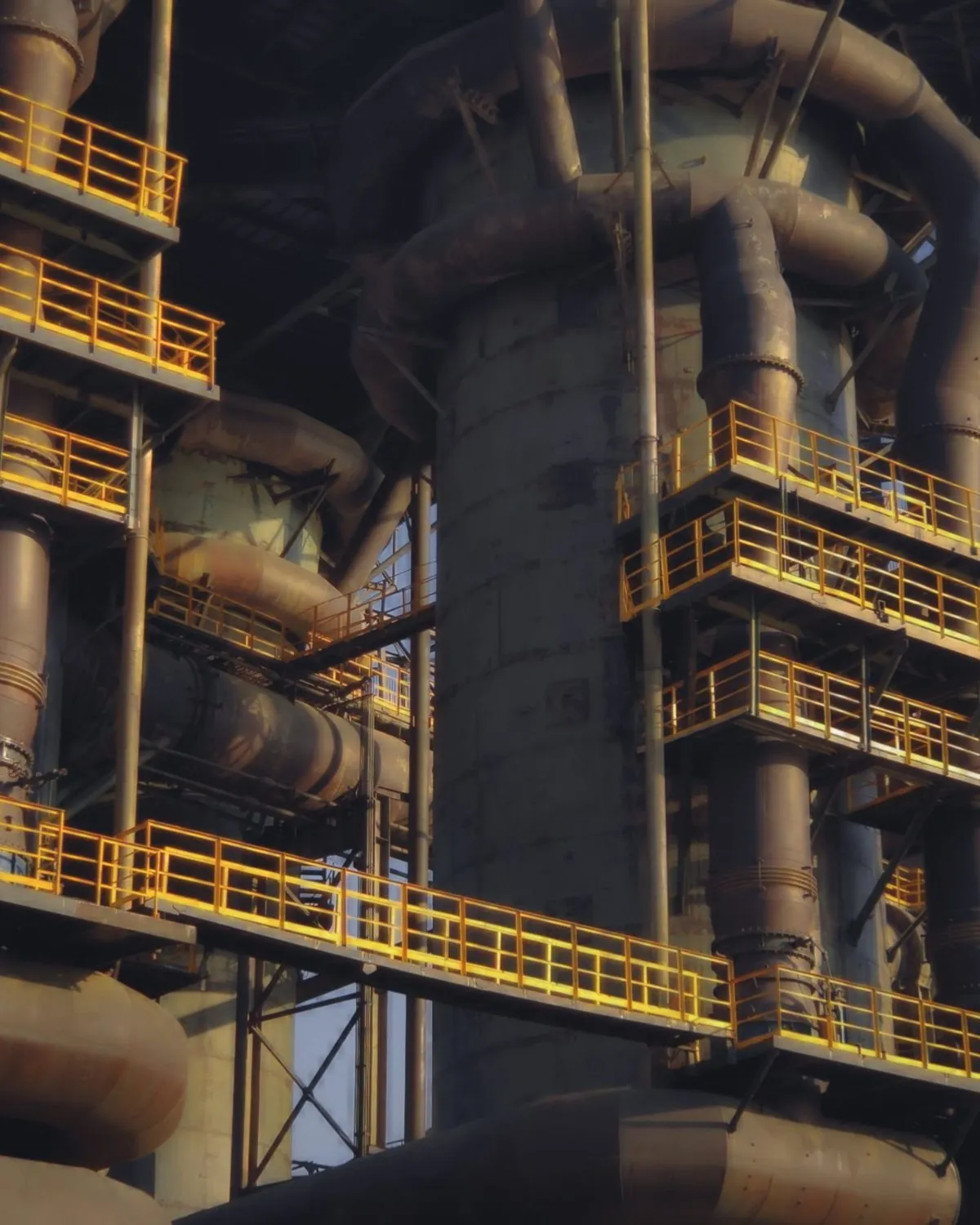
Water-tube boilers, economizers and large heat-recovery units use tubes that are rolled into drums and headers. Compared with condenser or air-conditioning tubes, these tubes are often larger in diameter and thicker in wall, and the rolling work is done in confined spaces such as the inside of a steam drum. Both conditions put demands on the tube roller: it must deliver enough torque to expand a thick wall, and it must fit where the tube end is.
This article sets out how to match a roller to the tube and the working space, using Lanbo's high-torque range as reference.
What drives the torque requirement
The torque needed to roll a tube rises with:
- Tube OD and wall thickness. A thicker wall needs more work to move it out against the hole and to reach the required wall reduction.
- Tube material and hardness. Carbon and alloy steel boiler tubes need more torque than copper alloys.
- Rolled length. Thicker tubesheets and drum walls mean a longer rolled zone, so more expander rolls are in contact at the same time.
The roller should reach the required torque with margin and stop at a repeatable setting. Under-rolling leaves a joint that may leak under pressure; over-rolling thins the tube wall more than specified and can damage the hole. Agree the expansion criteria with the boiler maker or the inspection authority, then set the roller to meet them.
Roller options by tube size
DZ-C electric tube rollers for large tubes
The DZ-C series is built for large and thick-wall tubes. Three sizes cover the range:
| Model | Tube OD | Output torque | Motor weight |
|---|---|---|---|
| DZ-C 76 | Φ45–Φ76 mm | 1200 N·m | 6.3 kg |
| DZ-C 108 | Φ76–Φ108 mm | 2000 N·m | 13 kg |
| DZ-C 159 | Φ109–Φ159 mm | 3500 N·m | 19 kg |
The DZ-C 159 is the choice when tubes reach Φ159 mm. For these sizes, plan how the reaction torque will be held — by a support arm, a balancing stand or a fixture — before work starts.

XR series high-torque servo roller
The XR Series High-Torque Servo Tube Roller covers 5–300 N·m and tube OD φ12.7–φ101.6 mm. A servo motor gives closed-loop torque control, and the telescopic shaft lets the operator move across a 1000 × 1000 mm working window without repositioning the unit for every tube. It suits drum and header work where many medium-size tubes are rolled to the same setting.
ES2 right-angle rollers for confined spaces
Inside a steam drum or a header there is often no room for a straight roller in line with the tube. A right-angle roller turns the drive through 90°, so the motor lies along the drum wall while the expander enters the tube. The ES2 Series Electric Tube Roller adds a touch screen and rolling records, which helps document every joint. The ES2 is the control box; the torque depends on the motor fitted (for example the ES-57 motor, 65–200 N·m). Right-angle models of the ES Series reach up to 500 N·m; for motor life we recommend working at about 400 N·m or below. Tell us the clearance available and we will confirm which motor fits.
HyDrive hydraulic explosion-proof roller
Where electrical tools are restricted, the HyDrive Series Hydraulic Explosion-Proof Tube Roller uses hydraulic drive. It covers tube OD φ25.4–114.3 mm and 64–1030 N·m, with a motor weight of 12–28 kg depending on size. It is suited to refinery and petrochemical units and other areas where an explosion-proof tool is specified.
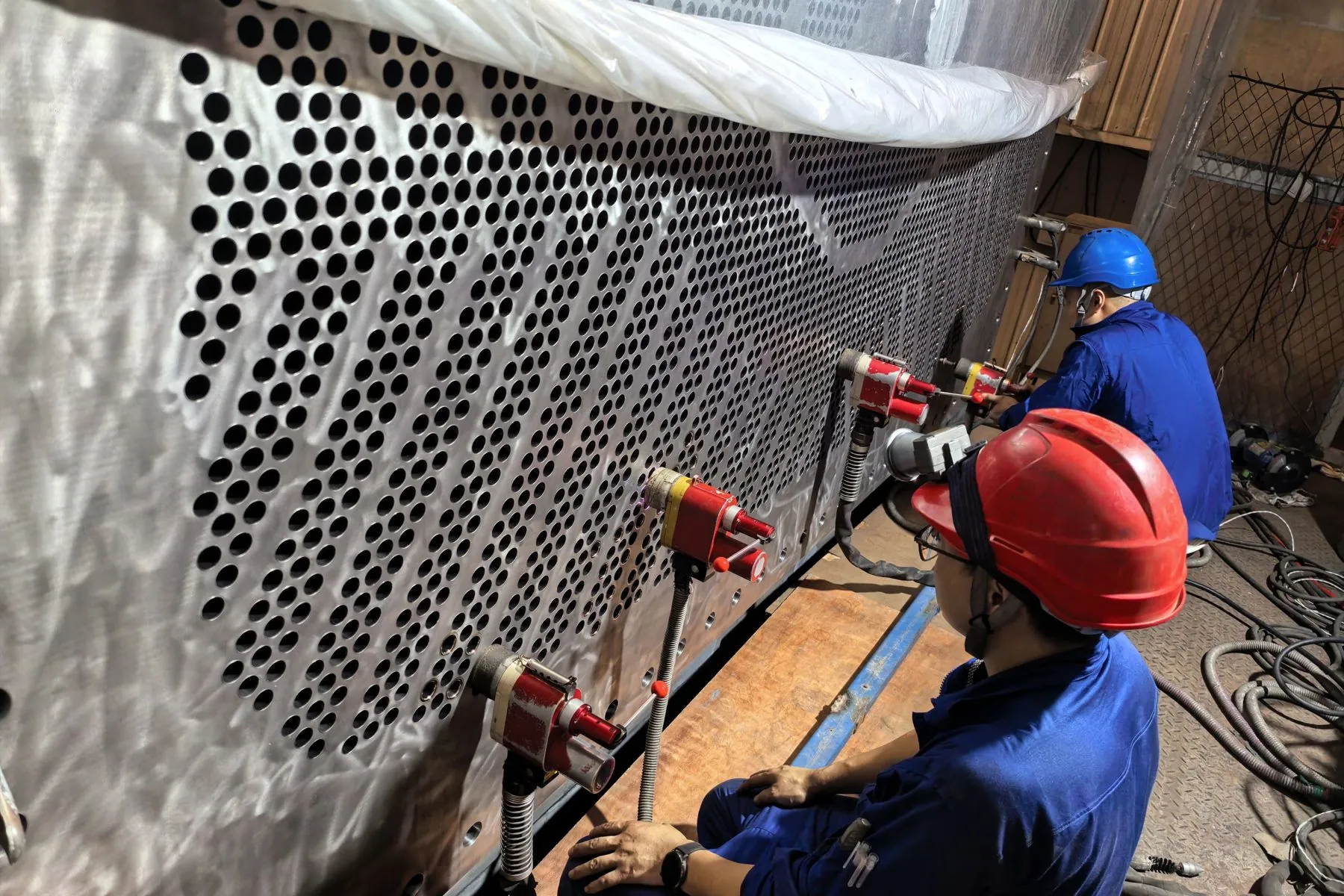
Matching roller, expander and setup
Expander selection
The roller provides torque; the expander does the work in the tube. Choose an expander that matches the tube ID after cleaning, the rolled length and the drum or tubesheet thickness. For flared joints, the expander must also have the flaring rolls in the right position relative to the tube projection.
Handling heavy units
At 13–28 kg, large rollers are tiring to hold for a full shift. A PHJ-1500 Pneumatic Balancing Stand gives 1500 mm travel on each of X / Y / Z and takes reaction torque up to 150 N·m, which suits medium-torque work. For higher torques, use a fixed reaction arm.
Checking torque
Before each job, check the roller against a TQM Series High-Speed Dynamic Torque Tester (0.4–500 N·m across 4 models). The tester displays live torque, speed and power, and saves records on a PC via RS485. DZ-C settings above 500 N·m are outside the tester's range; contact us about how to check them.
Lanbo tools for this job
- DZ-C 76, DZ-C 108, DZ-C 159 — large-tube rollers up to Φ159 mm and 3500 N·m
- XR Series servo roller — 5–300 N·m with telescopic shaft
- ES2 Series and ES Series — right-angle work in drums and headers
- HyDrive hydraulic roller — 64–1030 N·m, explosion-proof
- PHJ-1500 balancing stand and TQM torque tester
Lanbo also carries out retubing on water-tube boilers as well as fire-tube boilers, with its own method that can reduce retubing cost — contact us to discuss. Send tube OD, wall thickness, material, rolled length and the available working space, and we will propose a roller and expander set. Request a quote.
FAQ
Which Lanbo roller covers boiler tubes up to Φ159 mm?
The DZ-C 159 covers tube OD Φ109–Φ159 mm with 3500 N·m output torque. Smaller tubes are covered by the DZ-C 108 (Φ76–Φ108 mm, 2000 N·m) and DZ-C 76 (Φ45–Φ76 mm, 1200 N·m).
When should I choose a servo roller over a DZ-C roller?
Choose the XR servo roller (5–300 N·m, φ12.7–φ101.6 mm) when tubes are within its torque range and you want closed-loop torque control across many tubes. Choose a DZ-C roller when the tube size or wall needs torque above 300 N·m.
Why use a right-angle roller in a steam drum?
Inside a drum the space in front of the tube end is limited. A right-angle roller lets the motor sit along the drum wall while the expander enters the tube, so the tube can be rolled without a long straight tool in line with it.
Is the HyDrive suitable for hazardous areas?
The HyDrive is a hydraulic, explosion-proof roller for areas where electrical tools are restricted. It covers φ25.4–114.3 mm and 64–1030 N·m. Check the site's own permit requirements before use.